
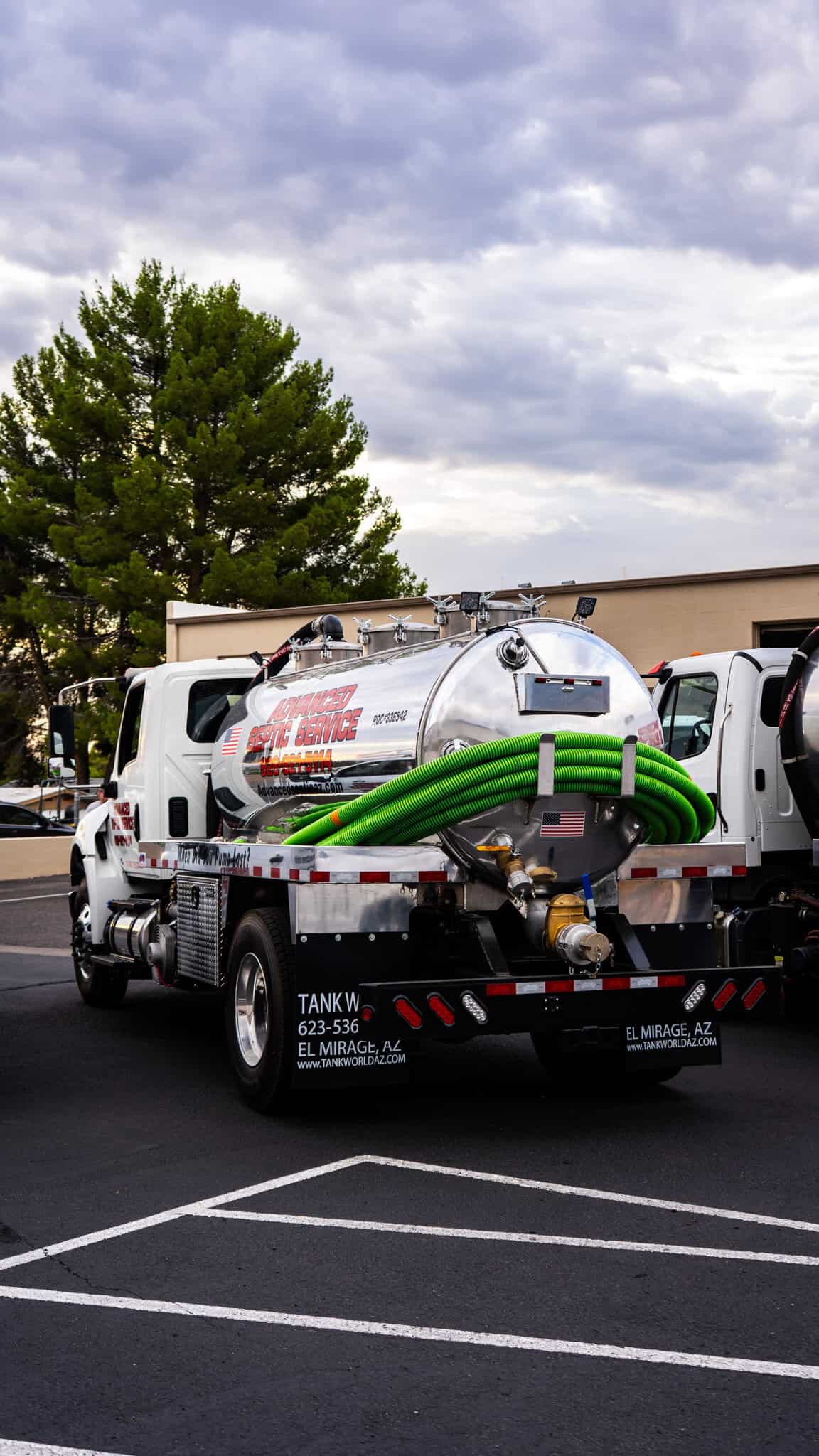
The One Task Your Septic System Cannot Skip
If there is a single thing that keeps a septic system healthy, it is regular pumping. Over time, solids build up in the tank no matter how careful you are, and eventually they have to be removed. Skip it for too long and those solids start flowing out toward the drain field, which turns an affordable routine service into an expensive repair.
Septic tank pumping clears out the accumulated sludge and scum so the tank can keep doing its job: holding wastewater long enough for solids to settle before the liquid moves on. Most of the time it is a straightforward, scheduled service. Sometimes it is urgent, when a tank is overdue and starts backing up. Advanced Septic Service handles both across the Verde Valley and both sides of Mingus Mountain, on a schedule that works for you or on short notice when something cannot wait.
If you are not sure when your tank was last pumped, you are not alone, and it is worth finding out before the system tells you the hard way. A quick look can tell us where things stand and when you are due.
What Septic Tank Pumping Actually Does
Inside a septic tank, wastewater separates into three layers. Solids sink to the bottom and form a layer of sludge. Lighter material like grease floats to the top as scum. The relatively clear liquid in the middle flows out to the drain field. The tank is designed to hold these layers so the solids stay put and only liquid leaves.
The catch is that the sludge and scum layers never stop growing. Bacteria break down some of the solids, but not all of them, so the bottom layer builds up year after year. Pumping is simply the removal of that accumulated sludge and scum before it fills enough of the tank to start escaping into the drain field. Once solids reach the field, they clog the soil, and that is the failure that costs real money to fix.
So while pumping is a routine service, it is doing something important every time: resetting the tank so it has the capacity to keep separating waste the way it is supposed to. A tank that is pumped on a sensible schedule can run reliably for decades.
How Often Should You Pump a Septic Tank?
For most households, every three to five years is a reasonable guideline. That said, most households hides a lot of variation, and the right interval for your system depends on a few specific things.
Tank Size
A larger tank holds more before it needs pumping, so it can often go longer between services. A smaller tank fills its capacity sooner and needs more frequent attention.
Household Size
The more people using the system, the more wastewater and solids it processes. A large family fills a tank far faster than a couple in the same-sized tank, so usage is one of the biggest factors in timing.
How the System Is Used
Heavy water use, a garbage disposal, or frequent guests all add to the load. Systems that take on more tend to need pumping more often than light-use systems do.
Because of these variables, the honest answer to how often is that it depends, and the best way to set your schedule is to have the tank checked. We can look at how full your tank is, factor in your household and usage, and recommend an interval that fits your system rather than a generic number. Staying on that schedule is the core of good septic maintenance.
Signs Your Septic Tank Needs Pumping
A tank on a good schedule rarely surprises you. But if pumping has been put off, or you have moved into a home and do not know the system’s history, the tank will start signaling that it is full. These are the warnings worth acting on.
Slow Drains Throughout the House
When every drain runs slowly, not just one, a full tank that cannot accept more flow is a likely cause.
Sewage Odors
Smells around drains indoors or over the tank and drain field outside can mean the tank is too full and gases or waste are backing up.
Pooling Water or Soggy Ground
Wet areas or standing water over the tank or drain field can indicate the tank is overfull and pushing liquid and solids out where they should not go.
Gurgling and Backups
Gurgling drains are an early warning. Actual sewage backing up into the house is the most serious sign and an emergency, one we respond to quickly.
If you are seeing these, do not wait for a full backup. Pumping an overdue tank promptly is far cheaper than cleaning up a backup and repairing a drain field that solids have begun to damage.
What to Expect During a Pumping Visit
If you have never had your tank pumped, or never watched it happen, the process is more straightforward than you might expect. We locate and access the tank, which is easy if it has risers at ground level and takes a little digging if the lids are buried. From there, we use a pump truck to remove the sludge and scum from the tank, checking the levels so we know the tank is fully cleared.
While we are in there, we take a look at the condition of the tank and its components, since an empty tank is the best chance to spot a problem early. If we notice something like a deteriorating baffle or a crack starting to form, we tell you, so you can address it before it becomes a failure. We are not there to upsell you. We are there because an open tank is the one moment those issues are actually visible.
The visit itself is usually quick. When it is done, your tank is reset to full working capacity, and we can let you know roughly when to expect your next service based on what we saw.
Emergency Septic Pumping
Not every pumping call can wait for an appointment. When a tank backs up, overflows, or a system stops accepting water, that is a problem that affects your home right now and can damage your system the longer it sits. We offer emergency septic pumping for exactly these situations, responding quickly to relieve the immediate problem and assess what caused it.
An emergency backup is also a signal worth heeding. Once the urgent situation is handled, it is worth understanding why it happened, whether it was simply an overdue tank or a sign of a deeper issue, so it does not repeat.
Pumping Plus a Set of Experienced Eyes
Anyone with a pump truck can empty a tank. The difference is what else happens during the visit. Because we work on every part of the septic system, we know what a healthy tank should look like and what early trouble looks like, and we pay attention while the tank is open.
That means a routine pumping with us is also a quick, informal check on your system’s health. We are not going to invent problems, but if there is something genuinely worth knowing, an early-stage issue you would want to catch before it grows, you will hear about it while it is still small and inexpensive to handle. A homeowner who gets that kind of heads-up is in a much better position than one who only finds out when the system fails.
We also know this region’s systems and conditions, and we keep our scheduling responsive, because a tank that needs pumping should not have to wait weeks. Whether you are setting up routine service or dealing with something more urgent, you are working with a local team that treats your time and your system seriously.
What Our Customers Say
”Absolutely perfect septic pumping experience. Really friendly and professional on the phone when scheduling, accommodating when setting the appointment, arrived when agreed upon, super friendly, professional and clean when pumping. This is an exceptional company in all respects!”
Karyl G., Verified Customer
”We use Advanced Septic for our septic pump out service. They came on the scheduled day at the scheduled time. They were friendly and polite and did a great job. I would recommend them for your septic needs.”
Claudia T., Verified Customer
Septic Tank Pumping FAQs
How often should I have my septic tank pumped?
For most households, every three to five years is a sensible guideline, but the right interval depends on your tank size, how many people use the system, and how heavily it is used. A small tank serving a large household needs pumping more often than a large tank serving a couple. The most reliable approach is to have the tank checked so the schedule fits your actual system rather than a generic rule.
What are the signs my septic tank is full?
The common warning signs are slow drains throughout the house, sewage odors indoors or outside, pooling water or soggy ground over the tank or drain field, and gurgling sounds in the plumbing. A sewage backup is the most serious sign and should be treated as an emergency. Catching the earlier signs and pumping promptly helps you avoid that outcome.
How much does septic tank pumping cost?
The cost depends on factors like the size of your tank, how accessible it is, and how overdue it is, since a severely overfull tank can take more work. We provide a free quote so you know the cost before we begin rather than guessing from a generic figure.
Do septic additives reduce how often I need to pump?
No. Despite the marketing, additives do not remove the solids that accumulate in your tank, and they are not a substitute for pumping. The sludge still has to be physically pumped out. A healthy tank already has the bacteria it needs, so the best thing you can do is keep up with regular pumping and avoid the harsh chemicals that harm those bacteria.
Stay Ahead of Your Septic Pumping
Regular pumping is the cheapest insurance there is for a septic system, and the easiest problem to avoid is the one you stay ahead of. Whether you are due for routine service, not sure when your tank was last pumped, or dealing with a backup right now, we are ready to help. Reach out and we will get you scheduled and provide a free quote, fast if it is urgent.