
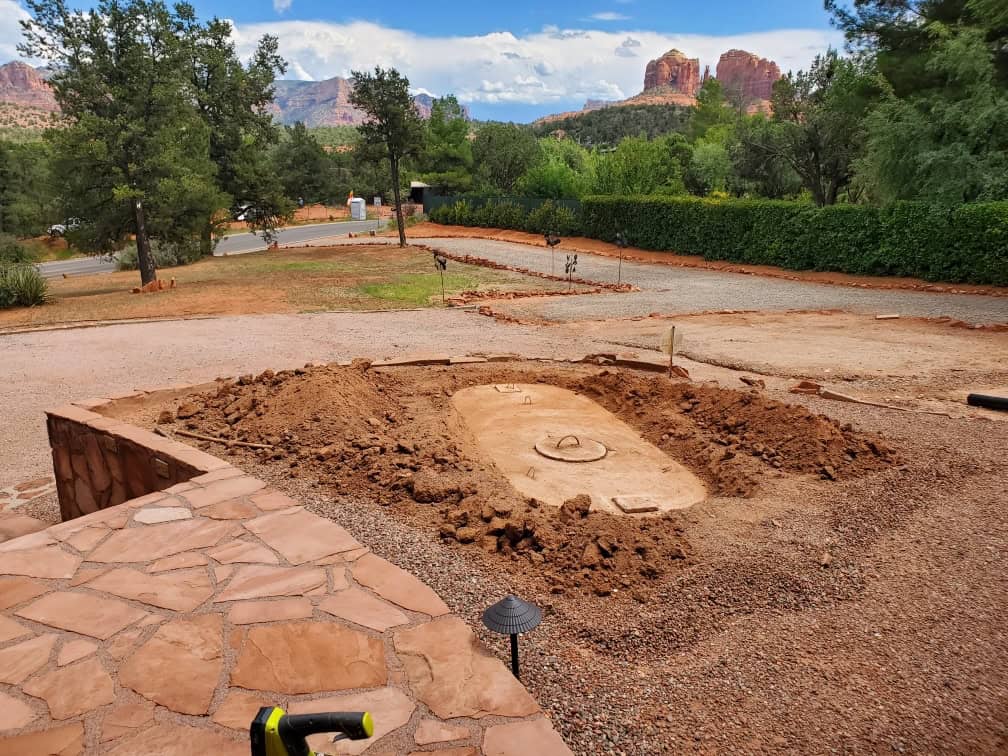
A New Septic System, Done Right the First Time
Maybe you are building on raw land with no system in place. Maybe the old system finally gave out and patching it no longer makes sense. Either way, a septic installation is one of those projects you want done correctly the first time, because fixing a system that was put in wrong costs far more than installing it right.
A septic tank installation is more than dropping a tank in the ground. It starts with understanding your soil and your property, gets the system sized and permitted for how you actually live, and ends with an installation that will run quietly for decades if it is done well. Advanced Septic Service handles all of it across the Verde Valley and both sides of Mingus Mountain, from the first site evaluation to the final inspection.
We install conventional systems for properties that can support them. If your lot has poor soil, a high water table, or other conditions that rule out a standard system, that does not mean you are stuck. It means you likely need an alternative septic system, which we also design and install. The first step is the same either way: figuring out what your specific property needs.
What a Septic Installation Includes
A proper septic installation is a sequence of steps, and each one depends on the one before it. It begins with a site evaluation, where we look at your soil, the layout of your property, and where a system can legally and safely go. That evaluation tells us what kind of system your land can support and how big it needs to be.
From there, the work moves through design and sizing, permitting with the county and the Arizona Department of Environmental Quality, the physical installation of the tank and drain field, and a final inspection before the system is put into service. We handle each stage, so you are not the one chasing permits or coordinating between a designer, an installer, and an inspector. That coordination is part of the job.
What you can expect from us is a system sized for your household, sited to protect your property and your water, and installed to meet code the first time. When the work is done, you have a system you can rely on and the paperwork to prove it was done right, which matters later if you ever sell.
Why a Properly Installed System Pays Off
The difference between a good installation and a corner-cutting one does not show up on day one. It shows up five or ten years down the road, in whether your system is quietly doing its job or backing up into your yard. A system installed correctly is a system you can mostly forget about.
A system sized for how you live
A septic system matched to your household and usage handles the load without strain. An undersized system fails early, and an oversized one costs more than you needed to spend.
Decades of reliable service
A conventional system that is properly installed and reasonably maintained can last 20 to 30 years or more. Getting the installation right is what makes that lifespan possible.
Protection for your property and water
A correctly sited and built system keeps wastewater where it belongs and protects your well, your soil, and the groundwater everyone in the area shares.
Documentation that holds up
A permitted, inspected installation gives you records that prove the system was done to code, which becomes important when it is time to sell the property.
Getting the installation right is the cheapest part of the system’s entire life, because it is what prevents the expensive problems later.
The Septic Installation Process, Step by Step
Most people have never installed a septic system and never plan to do it twice. Here is what the process actually looks like, so you know what you are signing up for before it starts.
1. Site Evaluation and Soil Testing
We start by looking at your property: the soil, the slope, the water table, and where a system can go. This usually includes a perc test, which measures how quickly your soil absorbs water and determines what kind of drain field your land can support. The results here shape every decision that follows.
2. System Design and Sizing
Based on the site evaluation, we design a system sized for your household. Sizing is driven mostly by the number of bedrooms, since that is how regulations estimate daily water use. This is also where we confirm whether a conventional system will work or whether your site calls for an alternative one.
3. Permitting
Septic systems require permits, and in Arizona that means working with the county and the Arizona Department of Environmental Quality. We handle the permitting paperwork and approvals so the system is legal and on record from the start.
4. Installation
With permits in hand, we install the tank and drain field. This is the part most people picture when they think of septic installation, and it is also the shortest phase when the steps before it were done right.
5. Inspection and Final Approval
Before the system goes into service, it is inspected to confirm it meets code. Once it passes, you have a working system and the documentation showing it was installed and approved correctly.Conventional Septic System Options
A conventional septic system has two main parts: a tank, where solids settle and break down, and a drain field, where the liquid is filtered through the soil. Within that basic design, there are choices worth understanding.
Tanks are commonly made of concrete or plastic (polyethylene). Concrete tanks are heavy, durable, and the most common choice for permanent installations. Plastic tanks are lighter and resist corrosion, which can make them a fit for certain sites. The right choice depends on your property, your budget, and local conditions, and we will walk you through the trade-offs rather than just picking for you.
The other major variable is drain field design, which is dictated largely by your soil and the perc test results. Some properties support a standard gravity drain field. Others need a different configuration to handle the soil they have. If your site cannot support a conventional drain field at all, that is when an alternative system becomes the right answer instead.
| System Component | What It Does | Common Options |
|---|---|---|
| Septic Tank | Holds wastewater so solids settle and break down | Concrete (durable, common) or plastic (lighter, corrosion-resistant) |
| Drain Field | Filters liquid waste through the soil | Configuration set by soil type and perc test results |
| System Type | Matches the system to your site | Conventional for suitable soil; alternative for difficult sites |
Why Property Owners Trust Us With Their Installations
A septic installation is mostly buried the day after it is finished, which means you are trusting that the work you cannot see was done right. The way to judge that ahead of time is the team’s track record and whether they will still be around to stand behind it.
We install systems across the full range of what Northern Arizona properties need, conventional and alternative, on straightforward lots and difficult ones. That range matters at the installation stage, because the team designing your system has seen what works and what fails in this region’s soil and terrain. We are not learning on your property.
The other thing worth knowing: the crew that installs your system is the same company that will pump, maintain, and repair it for years afterward. We are not walking away once the tank is in the ground. When you call about your system in five years, you are calling the people who put it there and have the records to match. That continuity is rare, and it is the reason a lot of our work comes from customers we installed for the first time years ago.
What Our Customers Say About Their New Systems
”Alexis at Advanced Septic Service is AWESOME! She always returns phone calls and helps to figure out solutions to what arguably is the most important function of a house with a septic system! The service people that come out are, professional and thorough.”
Marcy D., Verified Customer
”If you want it done right the first time by seasoned professionals, you need to call Advanced Septic Service!”
Casey, Verified Customer
Septic Tank Installation FAQs
How much does a septic system cost to install?
The honest answer is that it depends, because the price is driven by factors specific to your property: the type of system (a conventional system generally costs less to install than an alternative one), the size needed for your household, your soil and site conditions, and permitting. A simple installation on good soil costs far less than a complex one on a difficult lot. The best way to get a real number is a site evaluation, which is why we provide a free quote based on your actual property rather than a guess.
How long does a septic installation take?
The installation itself is often completed in a few days once it begins. The fuller timeline depends on the steps around it, mainly the site evaluation, design, and permitting, which can take longer depending on the county and the time of year. We give you a realistic schedule up front so you can plan around it.
Do I need a conventional or an alternative system?
That is determined by your property, not by preference. If your soil drains well and your site has no complicating factors, a conventional system is usually the right call. If you have poor soil, a high water table, or a tight or sloped lot, you likely need an alternative septic system. The perc test and site evaluation tell us which one your land can actually support.
Do you handle the permits?
Yes. We manage the permitting with the county and the Arizona Department of Environmental Quality as part of the installation, so the system is properly approved and on record. You do not have to navigate that process yourself.
How long will a new septic system last?
A conventional system that is properly installed and reasonably maintained can last 20 to 30 years or more. Lifespan comes down to two things: an installation done right at the start, and consistent care afterward, especially keeping up with regular septic pumping so solids never reach the drain field.
Start Your Septic Installation With a Free Quote
A new septic system is a significant investment, and the smartest first step is simply finding out what your property needs and what it will cost. Reach out and we will evaluate your site, walk you through your options in plain terms, and give you a free, honest quote before any commitment.