
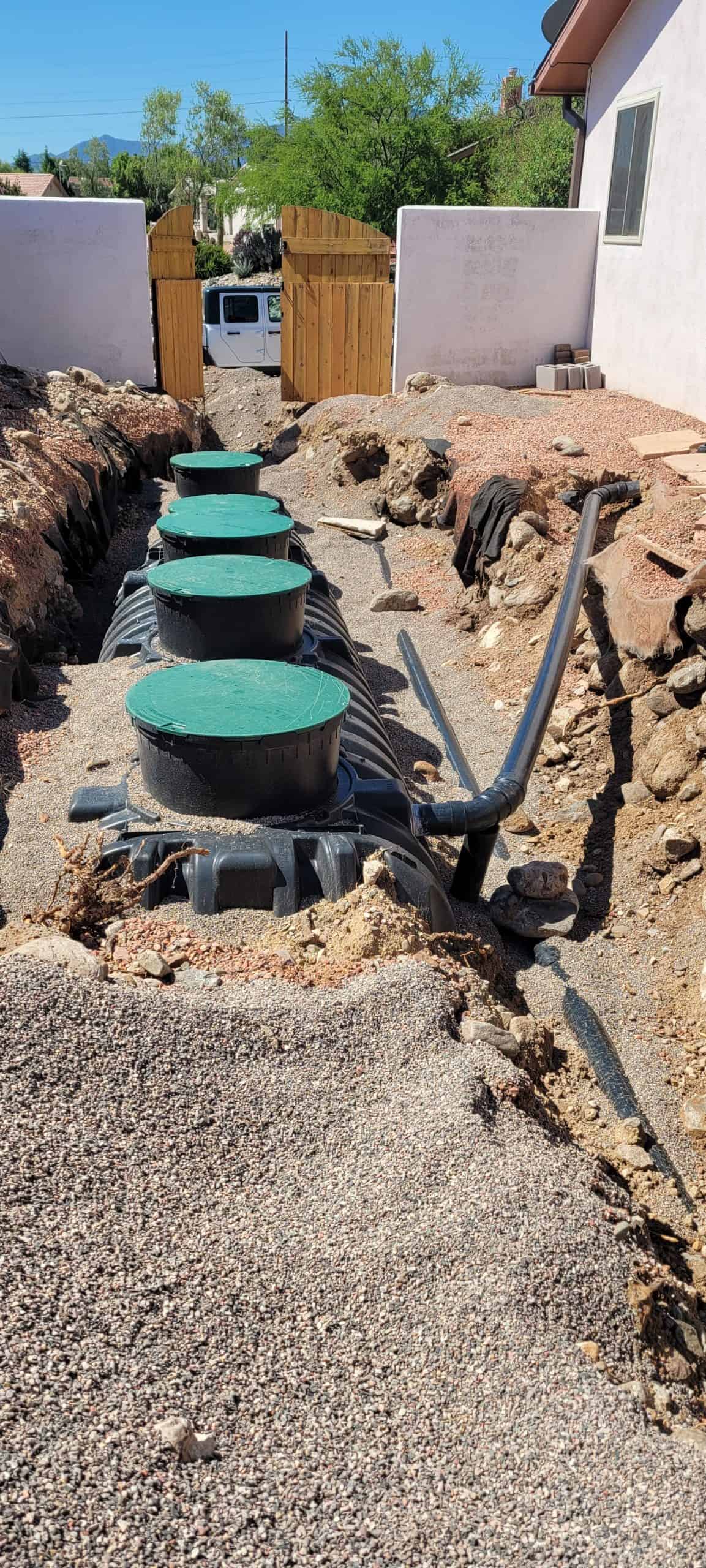
When the Drain Field Stops Doing Its Job
The drain field is the part of your septic system that does the final, quiet work: taking the liquid from your tank and filtering it safely through the soil. It is also the most expensive part to replace, so when a drain field starts to fail, it is worth taking seriously and acting on early.
A failing drain field shows itself in ways that are easy to misread: soggy ground, odors over the field, drains that slow down after heavy use or rain. Because the field is underground and out of sight, the trouble is often well along before the signs reach the surface. Drain field repair starts with understanding why the field is failing, because the cause determines whether it can be restored or needs to be replaced. Advanced Septic Service repairs drain fields across the Verde Valley and both sides of Mingus Mountain, on conventional and alternative systems alike.
Sometimes what looks like a drain field problem traces back to something upstream, like a tank issue sending solids into the field. If you are not sure where the trouble starts, our septic system repair service diagnoses the whole system first, so the repair addresses the real cause and not just the symptom.
Why Drain Fields Fail
A drain field works by letting liquid from the tank trickle out through a network of pipes and filter down through the soil, where nature finishes treating it. That process depends on the soil staying able to absorb water. Most drain field failures come down to something interfering with that absorption.
The most common cause is solids reaching the field. When a tank is not pumped on schedule, or when a failed baffle lets solids escape, that material flows into the drain field and clogs the soil so it can no longer absorb liquid. Other causes include hydraulic overload, which is simply more water than the field was built to handle, along with compaction from vehicles or construction over the field, root intrusion, and ordinary age. A drain field does not last forever, even when everything is done right.
Knowing the cause matters, because it changes the outcome. A field that is overloaded or partially clogged may be restorable. A field that has failed completely after decades of service is usually a replacement. Diagnosing why the field failed is the first real step, and it is where we start before recommending anything.
Drain Field Repair and Replacement Options
Once we understand why a field is struggling, there are a few directions a repair can take, depending on the cause and how far the failure has progressed.
Restoring a Struggling Field
When a field is clogged or overloaded but not fully failed, the fix often starts upstream: pumping the tank, correcting whatever let solids escape, and relieving the conditions that overloaded the field. Catching a field early, before the soil is permanently clogged, is what makes restoration possible, which is the best argument for acting at the first signs of trouble.
Repairing Damaged Components
Sometimes the field itself has a specific, fixable problem: a damaged distribution line, a failed connection, or a localized issue rather than a field-wide failure. In those cases we repair the affected part rather than replacing the whole field.
When Replacement Is the Honest Answer
A drain field that has reached the end of its life cannot be revived, and pretending otherwise just delays the inevitable at your expense. When a field is genuinely done, we will tell you plainly and walk you through replacement, including whether a conventional or an alternative system is the right fit for your property and soil. This is also where our experience with both system types matters, because the replacement should match what your land can actually support.
Field Repairs Backed by Whole-System Experience
Drain field work rewards experience, because the hardest part is judging whether a field can be saved or whether your money is better spent on replacement. Get that call wrong and you either replace a field that had years left or pour money into one that was already gone.
We repair drain fields on both conventional and alternative systems, which matters more than it sounds. A property that needed an alternative system in the first place usually needs an alternative approach to repair and replacement too, and not every septic company works comfortably across both. Because we design and install both types, we can tell you what will actually work on your soil rather than steering you toward the only option a company happens to offer.
We also see the field as part of the whole system. Often the smartest field repair includes fixing what damaged it in the first place, whether that is a pumping schedule that slipped or a tank component that failed. Solving the cause is what keeps a repaired field from failing again, and it is the difference between a fix that lasts and one that buys you a year.
What Our Customers Say
”Everything was as I was told. No surprises. Work was neatly and professionally completed in a timely manner. It was refreshing to have a contractor show concern for my hard earned money. Thank you Larry and team.”
Jim H., Verified Customer
Drain Field Repair FAQs
Can a drain field be repaired, or does it always need replacing?
It depends on why the field is failing and how far it has gone. A field that is clogged or overloaded but caught early can sometimes be restored, especially once the underlying cause is corrected. A field that has truly reached the end of its life needs replacement, because no repair will bring it back. We diagnose the cause first and give you an honest answer rather than assuming the most expensive outcome.
Is a drain field the same as a leach field?
Yes. A drain field is sometimes called a leach field, and the two terms refer to the same part of your septic system: the area where liquid from the tank is filtered through the soil. Whichever term you have heard, it is the component this page is about, and the same repair and replacement options apply.
What does a failing drain field look like?
Common signs include soggy or spongy ground over the field, standing water, strong odors outside near the field, and drains that back up or slow down, often worse after heavy water use or rain. A patch of grass that is noticeably greener and faster-growing over the field can also signal that effluent is surfacing instead of filtering properly.
How can I make my drain field last longer?
The single most effective thing is keeping solids out of it, which means pumping the tank on schedule so material never reaches the field. Beyond that, avoid driving or parking over the field, keep heavy water use spread out rather than overloading the system at once, and address tank problems promptly. Regular septic maintenance is what protects the most expensive part of your system.
Protect Your System With a Proper Drain Field Repair
A drain field is the costliest part of a septic system to replace, which makes early repair one of the smartest moves a property owner can make. If you are seeing soggy ground, odors, or slow drains, the time to act is now, while restoration may still be possible. Tell us what you are noticing and we will find the cause, explain your options honestly, and give you a free quote before any work begins.