

A hard monsoon storm rolls through Cottonwood, drops half an inch of rain in twenty minutes, and by evening the toilet is gurgling and the ground out back feels like a sponge. That timing is not a coincidence. When the desert takes on a season’s worth of rain in one afternoon, your septic system feels it too.
Most septic problems after heavy rain trace back to one thing: the ground around your drain field is holding more water than it can move. We see it every monsoon on both sides of Mingus Mountain, from the Verde Valley floor to the higher ground on the Prescott side.
This post covers why storms put your system under pressure, the warning signs worth paying attention to, and a few practical steps to protect your drain field before the next round of rain. No scare tactics here, just what we have learned pulling systems back from the edge after a wet July.
Why Heavy Rain Puts Pressure on Your Septic System
A conventional septic system depends on the soil around the drain field to soak up and filter the water that leaves your tank. That soil can only take in so much at a time. During monsoon season, storms saturate the ground, so the soil is already full of rainwater with little room left for what your household sends out.
When the field cannot accept more water, that water has nowhere to go, so it backs up toward the tank and the house. The industry term for this is hydraulic overload, and it is the most common reason a perfectly healthy system suddenly acts up after a storm.
Here is the reassuring part: this is usually about capacity, not damage. Once the ground dries out, many systems drain down and behave normally again. The real trouble starts when heavy water use during a storm keeps pushing more through a field that is already underwater.
Warning Signs to Watch for After a Storm
A little awareness goes a long way here. In the day or two after a big storm, these are the signals that your system is struggling to keep up:
- Slow drains and gurgling. Toilets, tubs, and sinks across the house drain sluggishly or make gurgling sounds.
- Sewage odor. A noticeable smell indoors near drains, or outside over the tank or drain field.
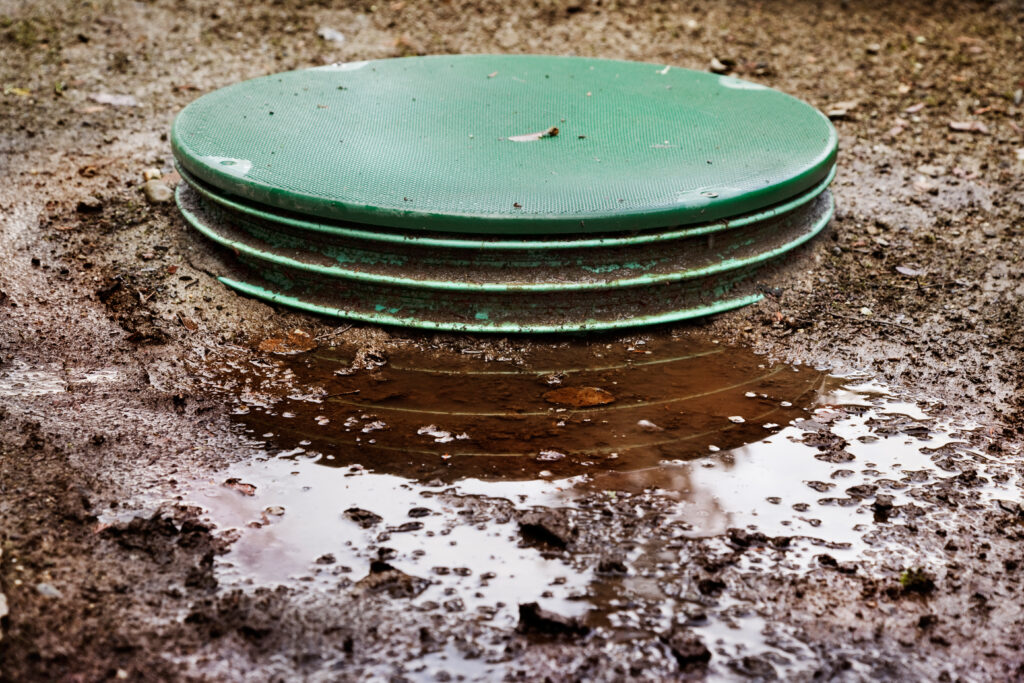
- Soggy or pooling ground. Standing water or spongy soil over the drain field, sometimes with a strip of unusually green grass.
- Backups. Wastewater surfacing in the lowest drains in the home, such as a basement or floor drain.
One sign on its own, right after a heavy storm, is worth keeping an eye on. Several at once, or any backup into the house, means it is time to call for help rather than wait it out.
What to Do, and What to Skip, When Your System Struggles After Rain
If your system is showing signs of overload, a few simple moves take pressure off the field while the ground drains:
- Ease off water use. Space out laundry, take shorter showers, and hold the dishwasher until things settle. Less water going in gives the field a chance to catch up.
- Keep surface water moving away. Make sure roof runoff, gutters, and yard drainage point away from the drain field instead of dumping onto it.
There are also a couple of well-meaning mistakes worth avoiding. The big one is pumping the tank while the ground is still saturated. It sounds logical, since an empty tank seems like it would relieve pressure, but pumping when the surrounding soil is waterlogged can let the tank shift or even float out of position. Wait until the ground drains, unless a professional tells you otherwise. It is also worth staying off the drain field entirely: driving or parking on soft, wet soil compacts the field when it is most vulnerable.
If drains are backing up into the house or sewage is surfacing in the yard, that is an emergency, not a wait-and-see. Call us at (928) 821-5114 and we will walk you through it.
How to Protect Your Drain Field Before the Next Monsoon
The best time to deal with a storm is before it arrives. A few habits keep your drain field ready to handle the next monsoon:
- Divert runoff. Grade landscaping and aim gutters and downspouts so water moves away from the field. A field that starts a storm dry handles rain far better than one already soaked.
- Keep up with pumping. The EPA recommends pumping most home septic tanks every three to five years. A tank on schedule sends cleaner water to the field, which keeps the soil from clogging and losing capacity over time.
- Protect the surface. No parking, driving, or heavy structures over the drain field, and skip deep-rooted plants that chase the moisture and invade the lines.
- Know your layout. Knowing where your tank and field sit makes every service call faster, which matters most in an emergency.
These are small habits, but they are the difference between a system that shrugs off a storm and one that surprises you at the worst possible time. If your field already struggles in ordinary rain, that can point to a deeper problem, and our drain field repair team can take a look before the next storm makes the decision for you.
Riding Out Monsoon Season With a System You Can Trust
Monsoon season is hard on plenty of things in Northern Arizona, and your septic system is on the list. Most storm-related trouble comes down to a saturated drain field and too much water at once, so a little awareness and a few good habits carry you a long way.
If your system acted up during this year’s storms, it is worth having it looked at before the ground dries out and the problem fades from memory, only to come back next summer. We are local, licensed, and insured (ROC #336542), and we work both sides of Mingus Mountain. Reach out through our contact page whenever you are ready, and we will give you a straight answer about what you saw and whether it needs attention.