

You just bought a place outside Cottonwood, or you have lived on the same rural lot for years, and it dawns on you that you have no idea when the septic tank was last pumped. That question, how often to pump your septic tank, comes up more than almost any other we hear, and the honest answer is not a single number.
There is a clear answer, though, and it is not complicated once you understand what the tank is doing. For most homes the range is every three to five years. What moves you within that range, or outside it, is a short list of factors tied to your household and your system.
The timing to think about this is good, too. The EPA runs SepticSmart Week every September (September 14 to 18 in 2026) to nudge homeowners into checking on their systems. This post gives you a practical way to figure out your own schedule, what changes it, and how to stop guessing.
The Short Answer: Pump Every Three to Five Years
For a typical household on a conventional system, plan to pump the septic tank every three to five years and have it inspected at least every three years. That is the guidance from the EPA, and it is the figure most state and county programs start from. If you run an alternative or aerobic system with pumps, floats, or other moving parts, it needs closer attention, usually a professional check once a year.
Three to five years is a solid planning target. It is a range for a reason, though, and the gap between the low end and the high end is real money and real risk. Knowing where your home actually lands is worth a few minutes of thought.
Why There Is No Single Magic Number
Inside the tank, wastewater separates into three layers. Solids settle to the bottom as sludge, grease and lighter material float to the top as scum, and the clearer water in the middle flows out to your drain field. Pumping clears out the sludge and scum before they build too far.
The rule professionals go by is to pump when the sludge and scum together fill about a third of the tank. Wait too long and those solids reach the outlet, slip into the drain field, and begin clogging the soil that does the filtering. That is the expensive failure you are really trying to avoid, since a drain field costs far more to repair than a tank costs to pump.
How quickly you reach that one-third mark depends on how much your household puts in and how big the tank is. That is why two neighbors on the same road can be on very different schedules.
What Actually Drives How Often You Pump
A handful of factors do most of the work in setting your interval:
- Household size. More people means more wastewater and faster solids buildup. This is usually the single biggest factor.
- Tank size. A larger tank holds more before it needs service. A small tank on a busy household fills quickly.
- Water use. Long showers, frequent laundry, and running toilets send more water through and can push solids toward the field.
- Garbage disposal. Using one regularly adds a lot of extra solids and can shorten your interval noticeably.
- System type. Alternative and aerobic systems have moving parts that need yearly attention on top of pumping.
To turn that into a starting estimate, here is a rough guide for a conventional tank of average size. Treat it as a planning tool, not a guarantee:
| Household size | Typical pumping interval |
| 1 to 2 people | Every 4 to 6 years |
| 3 to 4 people | Every 3 to 5 years |
| 5 or more people | Every 2 to 3 years |
These are general estimates. A smaller tank, heavy water use, or a garbage disposal pulls the interval shorter, while a large tank and light use stretch it longer. The only way to know your real number is to measure it.
How to Stop Guessing and Know Where You Stand
The dependable way to set your schedule is an inspection. During a pump-out or inspection, a technician measures the sludge and scum directly, often with a simple tool called a sludge judge, and tells you how full the tank really is. From there you can set a realistic interval for your specific home instead of working off a generic number.
Two habits make this easier over time. Keep a simple record of every pumping date and what was measured, and locate your tank and lids so access is quick when a truck shows up. If you cannot recall your last service and have no records, that alone is reason enough to schedule an inspection and start the clock fresh.
Waiting until you notice slow drains or odors is the most expensive way to learn you are overdue, because by then solids may already be reaching the field.
A Few Notes for Rural Northern Arizona Properties
Out here, most homes run on a private well and a septic system with no municipal sewer to fall back on, so the system on your property is the whole system. A couple of local realities are worth keeping in mind:
- Steady, year-round use. Full-time homes, guest rooms, and casitas keep a consistent load on the tank, so do not assume a rural system somehow needs less attention.
- Access and distance. On large lots and dirt roads, staying on a known schedule beats waiting on an emergency visit when help is a drive away.
The fundamentals do not change with the climate. A tank kept on schedule protects your drain field whether you sit down in the Verde Valley or up on the Prescott side.
Common Questions About Septic Tank Pumping
Can I pump my own septic tank?
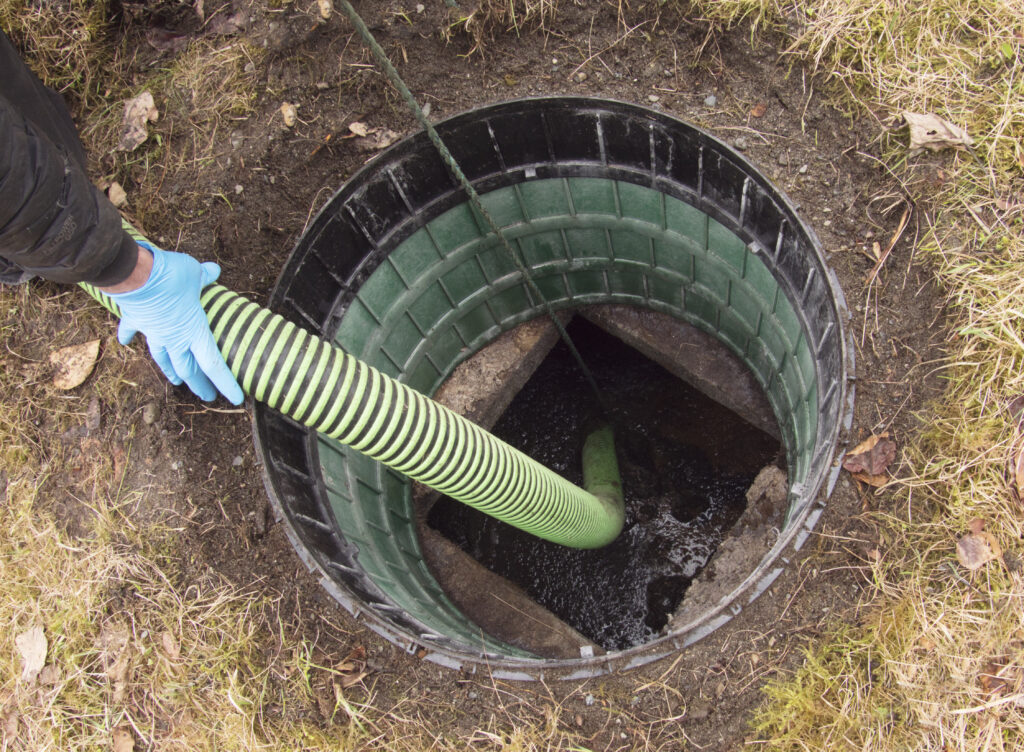
In practice, no. Pumping takes a vacuum truck to pull out the sludge and scum, and the waste has to be hauled to an approved disposal site, not emptied onto your property. It is messy, and easy to get wrong. This is one job worth leaving to a licensed septic pumping crew.
Does a bigger septic tank need pumping less often?
Usually, yes. A larger tank holds more sludge and scum before it reaches the point of needing service, so it can stretch the interval. Household size and water use still drive the schedule, though, which is why two homes with the same size tank can land on different timelines. An inspection confirms yours.
Does a garbage disposal affect how often I pump?
Yes. Running a garbage disposal regularly adds a steady stream of extra solids the tank has to hold, which can shorten your interval noticeably. If you use one often, plan to pump toward the shorter end of your range and have the tank checked so buildup does not slip out to the drain field.
Setting a Schedule You Can Actually Keep
How often you pump your septic tank comes down to your household, your tank, and honest measurement, not a figure pulled from the air. For most homes the every-three-to-five-years range is the right place to start, and an inspection turns that into a schedule built around your property.
If it has been more than a few years, or you simply do not know, that is the moment to get eyes on the tank. We handle septic pumping across the Verde Valley and the Prescott side, and we are glad to measure where you stand and set a realistic interval so you are not left guessing. Licensed and insured, ROC #336542. Start with our contact page or request a quote below.