
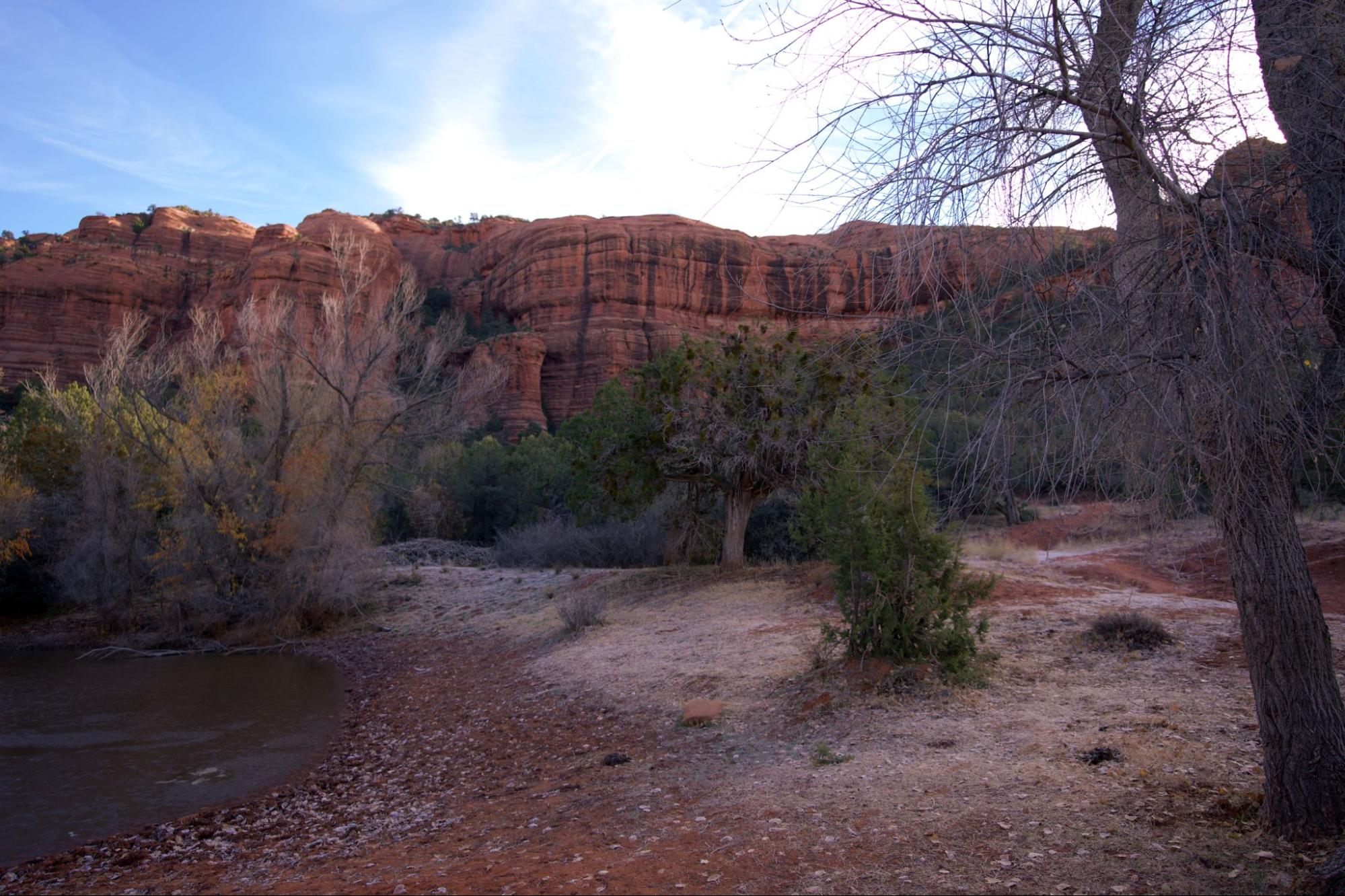
Septic Systems Built for Rimrock’s Ground and Water
A conventional drain field needs several feet of dry soil between it and the groundwater below. Along Wet Beaver Creek in Rimrock, that depth often isn’t there, and a hard caliche layer or shallow bedrock can stop water well before it drains as far as a standard system needs it to.
That gap is what an alternative septic installation in Rimrock, AZ is built to close. Instead of relying on the ground to filter wastewater, an alternative system treats it before it reaches the soil. If your water table sits high, or a perc test (a check of how fast your soil absorbs water) comes back slow, this extra treatment step is often what makes a working system possible.
Advanced Septic Service has installed both conventional and alternative systems across the Verde Valley for over a decade. On a creekside lot, the water table can shift by season, so what a system needs here isn’t something you can tell by looking. We test for it directly and tell you what the numbers mean before anything gets designed.
Find Out Where the Water Sits Before You Build
Groundwater depth on a Rimrock lot can shift with the season, and that level determines whether a conventional system will hold up. We check it on-site before you commit to a design.
Why the Soil Alone Can’t Finish the Job Here
A septic tank only handles part of the job. Solids settle out, but the liquid that leaves the tank still carries waste that has to be broken down before it reaches groundwater. On most properties, that final step is left entirely to the soil in a drain field. It works because bacteria in the ground keep breaking the water down as it moves through. Near the creek, that process runs out of room. A high water table, a caliche layer, or shallow bedrock doesn’t give the ground enough depth or enough time to finish filtering before wastewater reaches water that’s already there.
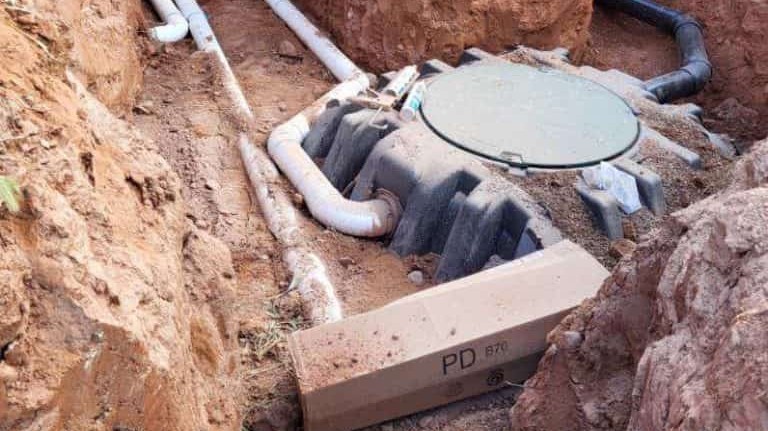
An alternative system moves part of that treatment upstream, before the water ever touches the soil. An aerobic treatment unit uses oxygen to break waste down more completely inside the tank itself. A drip system takes a different approach, releasing already-treated water in thin, shallow doses across a wider area instead of concentrating it in one drain field. Either way, less of the cleanup is left to soil that can’t reliably finish the job.
Yavapai County doesn’t treat an alternative system like a standard permit filing. The design has to be prepared by a qualified professional, an Arizona-registered engineer, sanitarian, or geologist, and larger systems require a design sealed by a registered engineer. From there it goes to Yavapai County, which reviews and permits onsite wastewater systems on ADEQ’s behalf. The process checks whether the design matches the water table and soil conditions your site investigation found. That step is what tells you the system is sized right before it’s in the ground, when changes are still inexpensive to make.
What We Handle for Rimrock’s Alternative Systems
A creekside lot doesn’t just need an alternative system installed. It needs someone who can read what the water table and soil are actually doing, design around it, and keep the system working for the long haul. Here’s what falls under one roof with Advanced Septic Service:
- Site Investigations and Perc Testing: Measures drainage speed and logs water table depth, the numbers Yavapai County needs to approve a design.
- Aerobic Treatment Units: Use oxygen to break down waste inside the tank when there’s not enough dry soil to finish the job.
- Mound Systems: Raise the drain field above the water table with imported soil, which is often the answer on a lot where groundwater sits too close to the surface to build down into.
- Drip Distribution: Spreads treated water through shallow lines across a wider area, so a lot with limited usable ground doesn’t have to hand all of it to one drain field.
- Engineered System Design: Built around what your site actually tested at, and sealed by a registered engineer when the system size calls for it.
- ADEQ and Yavapai County Permitting: We handle the paperwork and track it through approval.
- Septic Pumping: Removes solids on schedule to protect the system already in the ground.
- Drain Field Repair: Diagnoses the cause of a slow or backed-up field before recommending a fix.
None of this gets decided at a desk. What your lot needs comes from what’s in the ground, which is why the site visit always comes first.
Let Us Walk the Property With You
What Actually Decides Your System in Rimrock
No two lots along the creek test the same, and the differences usually trace back to three things: how high the water table runs, what’s buried under the topsoil, and the fact that there’s no public system to fall back on.
Water Table Depth Near Wet Beaver Creek
Rimrock runs right alongside Wet Beaver Creek, and parts of the surrounding area fall inside FEMA’s mapped floodplain, including stretches marked as floodway. Arizona rule requires a set amount of soil between the bottom of a drain field and the seasonal high water table, usually 5 or 10 feet for a standard trench system depending on how the soil drains. If the water table rises on your lot during monsoon season, a conventional system can lose that margin fast. Flood zones are drawn parcel by parcel, so the only way to know where your lot falls is to look it up and test the ground.
Caliche, Rock, and What the Soil Will Actually Take
Verde Valley soil is not one thing. Much of it is sandy or gravelly loam, and on paper that drains fine. What stops a drain field around here is usually what sits underneath: a hard caliche layer, shallow bedrock, or a band of heavy clay that shows up on one lot and not the one next door. Any of those can cut off drainage partway down. When testing comes back slow, it means a standard drain field would take too long to clear water between uses, and that result is what points toward an alternative design instead.
No Municipal Sewer to Fall Back On
Rimrock is unincorporated and there’s no municipal sewer, so every property handles its own wastewater on site. Water is a mix, with a local community water company serving much of the area and private wells covering the rest. Either way, there’s no shared sewer system to lean on if something goes wrong. Whatever gets installed has to work on its own, on that specific parcel, which is why testing the actual lot matters more here than it would somewhere with a backup option.
Inspecting the property and running the soil and water table tests are what turn these three factors from general Rimrock conditions into a plan for your specific lot.
A Local Team That Knows Verde Valley Ground
Alternative septic installation near the creek isn’t the same work as an install out in open desert. You have to account for a water table that moves with the season and get the design right the first time. Advanced Septic Service has worked on septic systems across the Verde Valley for over a decade, and our owner brings more than 30 years of hands-on plumbing and septic experience to the work. We’ve seen what creekside ground does to a system that wasn’t built for it.
We carry the Arizona ROC license (#336542) this work requires, and we hold an A+ rating with the Better Business Bureau. On a creekside lot, a site investigation doesn’t mean much if the crew that read the water table isn’t the crew designing around it. Ours is. Same people from the first walk of the property to the day the county signs off.
What Our Customers Are Saying
⭐⭐⭐⭐⭐
“Arrived on time and went right to work. Both men were knowledgeable and willingly answered questions. No effort was made to try to sell me any extras. Final price was exactly what was quoted.”
Dave L., Verified Customer
⭐⭐⭐⭐⭐
“These guys are great! Amazing customer service from start to finish. They go above and beyond to get to you as quick as they can. They were very thorough and even put our yard back together so well, as if they were never here! Thanks again for a great experience!”
Jadyn O., Verified Customer
Ready to Talk Through Your Options?
Serving Rimrock and the Surrounding Verde Valley
Rimrock sits along Wet Beaver Creek just off I-17, roughly 20 miles south of Sedona and about 8 miles from Camp Verde. Rimrock, McGuireville, and Lake Montezuma together make up what locals call the Beaver Creek community. Montezuma Well, a natural limestone sinkhole and a detached unit of Montezuma Castle National Monument, is right here in the area and one of its most recognizable landmarks.
We also serve the rest of the Verde Valley side of Mingus Mountain, including Cottonwood, Cornville, Camp Verde, and Sedona. An alternative septic system is just one part of what we do here. If your property needs something else, our full range of septic services in Rimrock covers pumping, repair, and maintenance too. You can also call and we’ll walk you through what your lot needs.
Rimrock Alternative Septic Installation FAQs
How long does an alternative septic system last in Rimrock?
Arizona rule requires these systems to be designed for a 20-year operational life, and a well-maintained one in Rimrock often goes past that. The tank and lines rarely fail first. It's the aerators, pumps, and filters that wear down, and they wear faster on a system fighting a seasonal water table. Annual component checks are what get you there.
Does difficult soil make alternative septic installation more expensive in Rimrock?
Often, yes. Caliche, shallow rock, or a high water table can mean a larger or differently engineered drain field, and alternative systems carry design and permitting costs a conventional install doesn't. Yavapai County alone charges $1,050 to permit an alternative system versus $550 for a standard one. We price the job after testing.
How often does an alternative system need service in Rimrock?
Most tanks still need pumping every 3 to 5 years, the same as a conventional system. The difference is the mechanical side. Arizona requires a service contract for at least the first year on an alternative system, and units with pumps, aerators, or float switches need checking about once a year after that. We build the schedule around your specific system.
Do I need new soil testing if my old septic system failed near the creek?
Yes. A failed system doesn't carry its old approval forward, especially near a floodplain where conditions shift. Yavapai County requires current site testing before approving any replacement design. That can be a percolation test or a soil evaluation by a qualified professional, depending on what your lot calls for.
How long does an alternative septic system last in Rimrock?
Arizona rule requires these systems to be designed for a 20-year operational life, and a well-maintained one in Rimrock often goes past that. The tank and lines rarely fail first. It’s the aerators, pumps, and filters that wear down, and they wear faster on a system fighting a seasonal water table. Annual component checks are what get you there.
Does difficult soil make alternative septic installation more expensive in Rimrock?
Often, yes. Caliche, shallow rock, or a high water table can mean a larger or differently engineered drain field, and alternative systems carry design and permitting costs a conventional install doesn’t. Yavapai County alone charges $1,050 to permit an alternative system versus $550 for a standard one. We price the job after testing.
How often does an alternative system need service in Rimrock?
Most tanks still need pumping every 3 to 5 years, the same as a conventional system. The difference is the mechanical side. Arizona requires a service contract for at least the first year on an alternative system, and units with pumps, aerators, or float switches need checking about once a year after that. We build the schedule around your specific system.
Do I need new soil testing if my old septic system failed near the creek?
Yes. A failed system doesn’t carry its old approval forward, especially near a floodplain where conditions shift. Yavapai County requires current site testing before approving any replacement design. That can be a percolation test or a soil evaluation by a qualified professional, depending on what your lot calls for.
Get Your Rimrock Property Evaluated
Every creekside lot in Rimrock carries its own mix of water table depth and soil conditions, and that mix is what actually determines your options. That’s what the testing is for. Contact us to schedule a site visit, and we’ll assess the property, run the testing, and lay out what your lot can support in plain terms.